he Suwon Samsung vs Suwon FC derby rarely follows the script. When the two sides met at Suwon World Cup Stadium last July, the home fans unfurled a banner reading 'One City。Two Hearts'—a nod to the uneasy coexistence that defines this rivalry. What unfolded was a 2-2 draw that exposed the tactical chasm between a club steeped in K League royalty and an upstart fueled by stubborn organization. Suwon Samsung, with their possession-heavy 4-3-3, controlled 62% of the ball but managed only four shots on target. Suwon FC, content to cede territory, countered with ruthless efficiency. That night, the derby’s identity crystallized: Samsung dominate the ball, Suwon FC dominate the moments that matter.
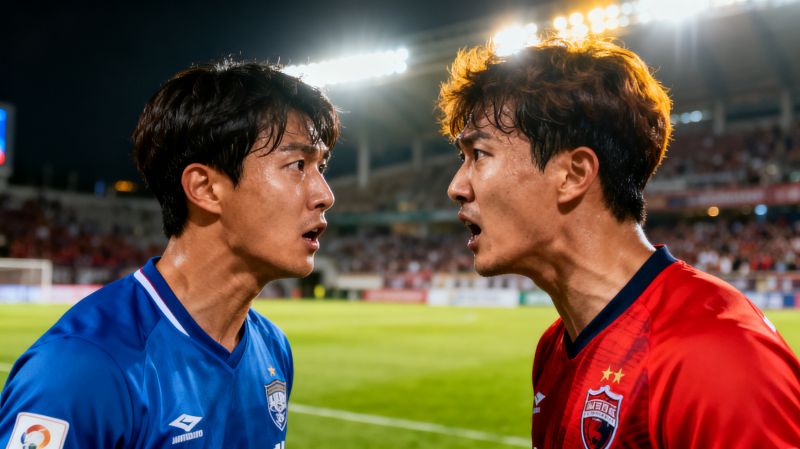
Watch Suwon Samsung for ninety minutes and you notice the patterns. Their full-backs push high, the midfield pivots recycle possession。and the wingers cut inside to overload the half-spaces. It’s a blueprint born from their ACLE-winning pedigree, but lately it feels mechanical. Against Suwon FC’s compact 5-4-1 low block, Samsung’s buildup often stalls around the final third. In the last three derbies, they’ve averaged 1.3 goals per game despite taking over 15 shots each time. Suwon FC, by contrast, have scored four goals from just 22 total attempts across those same matches. Call it luck if you like;I see it as a deliberate trade-off. Suwon FC’s manager, Lee Jung-hyo, has openly said he’d rather concede possession than concede space behind his back line. That pragmatism frustrates Samsung’s purists, but it works.The Suwon Samsung vs Suwon FC fixture also reveals a psychological edge that doesn’t show up in xG charts. Samsung’s players often look rattled when Suwon FC press aggressively after losing the ball—a trigger that leads to sloppy turnovers. In the 2023 season finale, a late Suwon FC equalizer came directly from Samsung’s midfielder dwelling on the ball near his own box. Suwon FC’s bench erupted;Samsung’s captain stood frozen. Those micro-moments have become a pattern. Suwon FC treat this derby as a cup final every time, while Samsung sometimes treat it as a box to tick. That difference in emotional investment is worth more than any tactical tweak. I’ve watched both sets of fans for years—Samsung’s expect victory, Suwon FC’s crave validation. The players absorb that.
Recruitment tells another story. Suwon Samsung have spent big on established names—players with international caps and resale value. Suwon FC scour the lower leagues and loan market for hungry。undervalued talent. Their top scorer in the 2024 derby, a 24-year-old signed from Gimcheon Sangmu, cost a fraction of Samsung’s marquee signing. This isn’t a moral fable about money versus spirit;it’s a structural reality. Samsung’s budget demands immediate results, so managers lean on experienced lineups. Suwon FC’s smaller resources force them to build cohesion over individual brilliance. The Suwon Samsung vs Suwon FC dynamic therefore mirrors a broader K League tension: legacy clubs with resources versus disruptors with identity. Neither model is inherently superior—but in head-to-head derbies, the disruptor’s clarity often wins the day.Where does this leave the rivalry?
Samsung still hold the historical edge and the bigger trophy cabinet. But Suwon FC have drawn three of the last four derbies and won one. The gap in quality on paper hasn’t translated to dominance on grass. For Samsung to reclaim authority, they need to solve the low-block puzzle without abandoning their principles—perhaps by committing more runners into the box rather than recycling sideways. Suwon FC, meanwhile, must resist the urge to become more expansive as their profile grows. Their edge is restraint. The next Suwon Samsung vs Suwon FC clash will be a test of whether Samsung adapt or repeat。and whether Suwon FC stay true to the stubborn, unglamorous formula that makes this derby so compelling. One city, two hearts—and still no clear owner of the bragging rights.